Cinema
Noua
Abdelaziz Tolbi · 1972
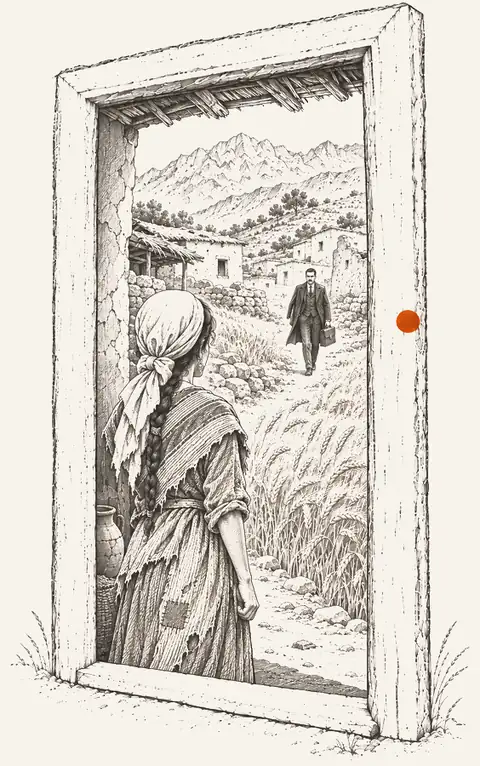
Synopsis
On the eve of 1 November 1954, in a village in the Aurès where poverty is bottomless. Against the poor stand the colonial administration and the Algerian landowners, who divide the harvest among themselves before it has been gathered. Noua loves the son of an old peasant dispossessed of his land; her family, for its part, must sell her to a rich man, and the day approaches.
Context
The screenplay is drawn from a short story by Tahar Ouettar, an Arabic-language writer whose first volume, published in Tunis in 1961, contains the text that gives the film its title. Television produced it, and the film office distributed it. Tolbi shot in sixteen millimetre blown up to thirty-five, in black and white, at Aïn El Arba, with the local inhabitants, with no hired actors and no added music. Ninety minutes, a jarring editing style, faces one will not see again elsewhere.
Who it is for
An hour and a half, subtitled, easy to follow but relentlessly harsh: hunger, debt, and a young girl who is about to be sold. It helps to know that no character utters a slogan.
Prizes and reception
The film has remained a reference of the so-called committed Algerian cinema of the seventies, and MK2 now handles its distribution.