Novel
Small Town Tyrant
Professor Unrat
Heinrich Mann · 1905
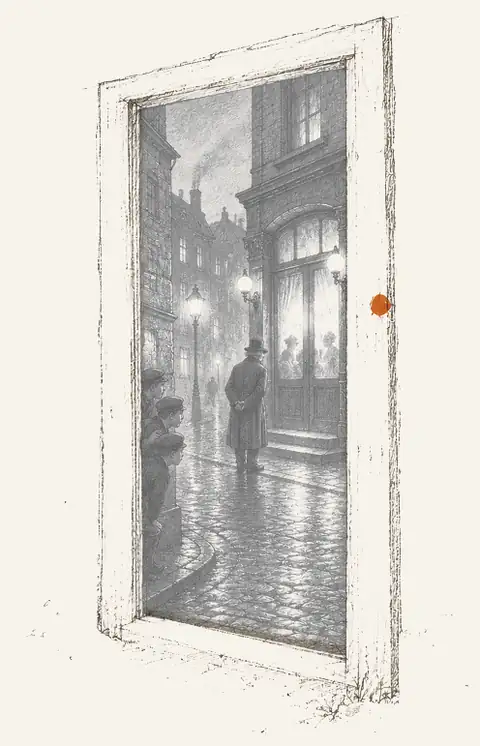
Opening lines
Da er Raat hieß, nannte die ganze Schule ihn Unrat. Nichts konnte einfacher und natürlicher sein.
Since his name was Raat, the whole school called him Unrat, Filth. Nothing could have been simpler or more natural.
Translation by Erostrate
Text quoted from gutenberg.org
Synopsis
Old Professor Raat, whom a whole small town has nicknamed Unrat, that is to say filth, for generations, wages a daily war against his pupils. In the notebook of the most elusive of them, Lohmann, he discovers a poem in praise of Rosa Fröhlich, a barefoot dancer who performs at the cabaret The Blue Angel. Determined to catch his pupils out, he seeks her out there and orders her to leave the town; she takes up his defence, offers him wine, and he gradually falls under her spell.
Context
Written from the end of 1903 to the summer of 1904, the novel appeared in 1905 in Munich from Albert Langen, under the full title Professor Unrat oder Das Ende eines Tyrannen. It targets the school and the pretences of Wilhelmine bourgeois society. In 1930, Josef von Sternberg made The Blue Angel from it, with Emil Jannings and Marlene Dietrich, and the book was from then on sometimes sold under the film's title; Edward Dmytryk made a new version in 1959. Charles Wolff's French translation, published in 1932, was revised by Olivier Mannoni in 2008.
Who it is for
A short novel, darker than the film made from it; the film's singer is a dancer in it, and the professor remains the central character.
Prizes and reception
Counted among Heinrich Mann's major narrative works, it owes its worldwide fame to its translations and to the film of 1930.