Novel
Juvenilia
Not translated into English
Miguel Cané · 1884
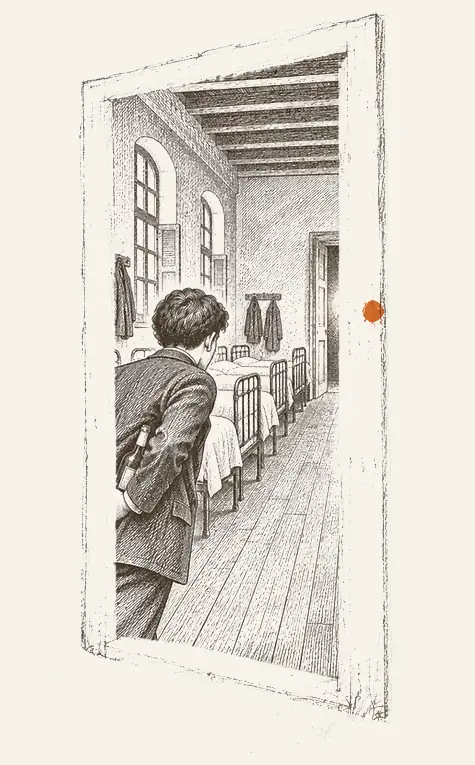
Opening lines
Debía entrar en el Colegio Nacional tres meses después de la muerte de mi padre; la tristeza del hogar, el espectáculo constante del duelo, el llanto silencioso de mi madre, me hicieron desear abreviar el plazo, y yo mismo pedí ingresar tan pronto como se celebraran los funerales.
I was to enter the Colegio Nacional three months after my father's death; the sadness of the home, the constant sight of mourning, my mother's silent weeping made me wish to shorten the wait, and I myself asked to be admitted as soon as the funeral had taken place.
Translation by Erostrate
Text quoted from es.wikisource.org
Synopsis
The author looks back on his years as a boarder at the Colegio Nacional de Buenos Aires, from 1863 to 1868, in the old building on Calle Bolívar, according to the Argentine government and Torres-Pou. He recounts the pupils' pranks, the exams where they cheat, the punishments avoided, the tobacco smoked in secret, the fruit and bottles pilfered, according to Lecturalia, and a first love. At the centre stands the rector, the French educator Amédée Jacques, whom the book makes a decisive teacher.
Context
The book appeared in 1884, according to the Argentine government and Torres-Pou; Biografías y Vidas dates it to 1882. Subtitled “Memoirs of a Student”, it is written in the first person, in a familiar and ironic tone, and also depicts the manners of the high society from which the author came. Torres-Pou sees in it a memory reshaped to affirm the values of a generation: the narrator admits once that the school was like a prison, but above all praises his teachers and European culture.
Who it is for
Schoolboy memories in Spanish, in a familiar tone; no known French translation.
Prizes and reception
One of the best-known books of nineteenth-century Argentine literature, according to the Argentine government.
Sources for this page 6
The pages consulted to check this page.