Novel
Honourable Beggars
Մեծապատիվ մուրացկաններ
Hakob Paronian · 1880
Opening lines
Հազար ութը հարյուր յոթանասուն․․․ չեմ հիշեր՝ քանիին, սեպտեմբերի երեսունը մեկին,― ներեցեք, երեսունին պիտի ըսեի, վասնզի սեպտեմբերն երեսուն օր միայն ունի,― երկար և ընդարձակ թիկնոցի մը մեջ փաթաթված միջահասակ և գիրուկ մարդ մը, որ Տրապիզոնի շոգենավեն նոր ելած էր, Ղալաթիո նավամատույցին վրա կայնած՝ նավակե մը յուր սնդուկները հանել կաշխատեր։
In eighteen hundred and seventy… I don't remember which, on the thirty-first of September (forgive me, I meant the thirtieth, since September has only thirty days), a stout man of medium height, wrapped in a long, ample cloak, who had just come off the Trebizond steamer, was standing on the Galata quay trying to get his trunks out of a boat.
Translation by Erostrate
Text quoted from hy.wikisource.org
Synopsis
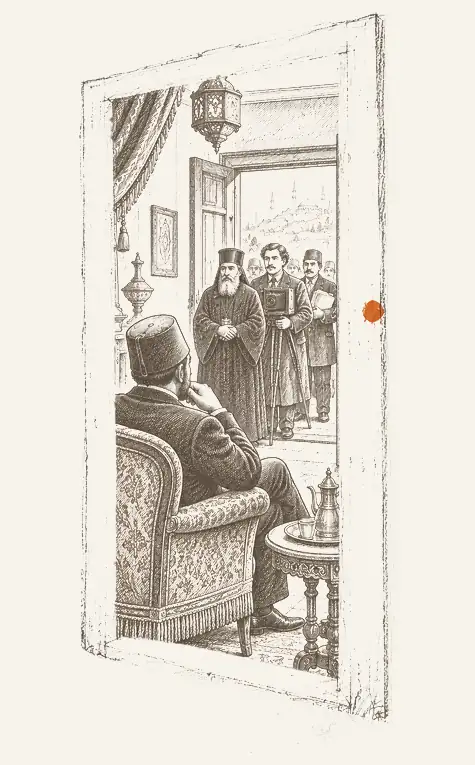
The honourable beggars: Abisoghom agha, a wealthy landowner from Trebizond, arrives in Constantinople to take a wife. Barely settled, he sees a parade pass through his home: a newspaper editor, a priest, a poet, a photographer, a doctor, a schoolteacher, a lawyer, all come to serve him and leave with something.
Context
The text appeared in instalments from 1880, with S. Gh. Partizpanian, an announcement of 1 November of that year signalling the first of them; publication continued until 1881 and the separate volume only arrived in 1887. In its last lines, the author writes that he wanted less to accuse the editors, writers and poets of his time than to show later generations the state in which they were being left, and the indifference of the nation's rich to matters of the mind. The petitioners who file through Abisoghom agha's house are thus the lettered half of a capital.
Who it is for
Short, in Western Armenian. The comedy lies in the dialogues and the return of the same visits, and one must accept that the plot hardly moves forward.
Prizes and reception
The most admired work of the man regarded as the greatest Armenian satirist, and one of the few available in English.