Cinema
Singende Jugend
Max Neufeld · 1936
Synopsis
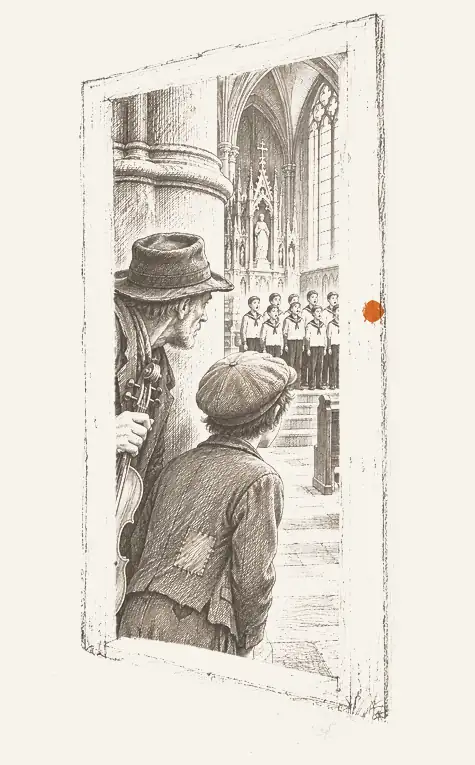
Toni, an orphan from the outskirts of Vienna, lives with a brutal foster father; to escape the beatings, he follows Blüml, a street musician who takes him in charge. Driven off by the police, they take refuge in a church where the Vienna Boys' Choir are rehearsing, and Toni wants only one thing, to join them. Accepted into the choir, he soon finds himself suspected of stealing a thousand-schilling note.
Context
An Austro-Dutch co-production shot in a studio in Vienna, then at Hinterbichl and on the Grossglockner road, opened shortly before: the Austrian state was counting on this kind of film to make itself known abroad. The film was released on 11 April 1936 and drew a large audience in England, France and Czechoslovakia. In Germany, its director being regarded as Jewish, it appeared only in 1950, under the title Mit Musik durchs Leben. It was Neufeld's last film in German before his departure for Italy.
Who it is for
A musical film built around a famous children's choir. The first scenes show the misery of Viennese courtyards with a roughness rare in this cinema; the rest is an edifying story.
Prizes and reception
Voted best foreign film of the 1936 season in Czechoslovakia, and one of the films through which Austria became known abroad.
Sources for this page 7
The pages consulted to check this page.