Poetry
Volksliedjes
Not translated into English
Theodoor van Rijswijck · 1846
Opening lines
Wie is 't die van ons wil weten,
Waer de Nederlanden zyn?
Aen de Lei of aen de Nethen,
Aen de Maes of aen den Rhyn? -
Who is it that would learn from us
Where the Low Countries are?
On the Leie or on the Nete,
On the Meuse or on the Rhine?
Translation by Erostrate
Text quoted from dbnl.org
Synopsis
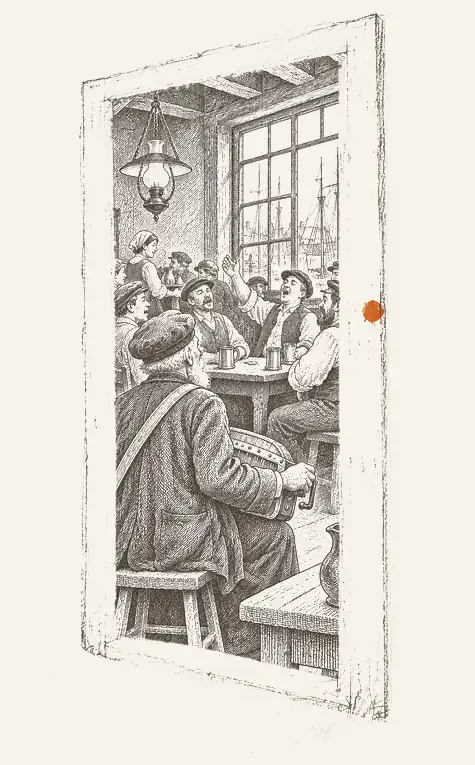
Popular songs: verses to be sung to familiar tunes, which the poet says are turned in the French manner because the people are nourished on romances and couplets from France. The collection mixes patriotic songs, from the Netherlands of old to Flanders and the Scheldt, songs for occasions, songs of drinkers and smokers, and a few romances. In Les Vagabonds, wretched people recall the time when Flanders prospered, before foreigners took power. The last poem has a hurdy-gurdy player speak.
Context
The collection appeared in Antwerp in 1846, from the bookseller Karel Oberts, on the Steenhouwersvest; three pieces had appeared two years earlier under the title Drie volksliedjes. Two Flemish magazines reviewed it at once: one saw in it patriotic songs rather than true folk songs and reproached the poet with imitating Béranger, the other held Les Vagabonds worthy of the French songwriter. It was his last book; his complete works appeared in 1853, gathered by his chamber of rhetoric.
Who it is for
Short songs, in Flemish from before the spelling reforms, made for the voice more than for the eye; they exist neither in French nor in English.
Prizes and reception
His most popular work: the poem that closes the collection earned him the nickname of the hurdy-gurdy player, under which he remained the poet of the people.
Sources for this page 2
The pages consulted to check this page.