Novel
La candidatura de Rojas
Not translated into English
Armando Chirveches · 1909
Synopsis
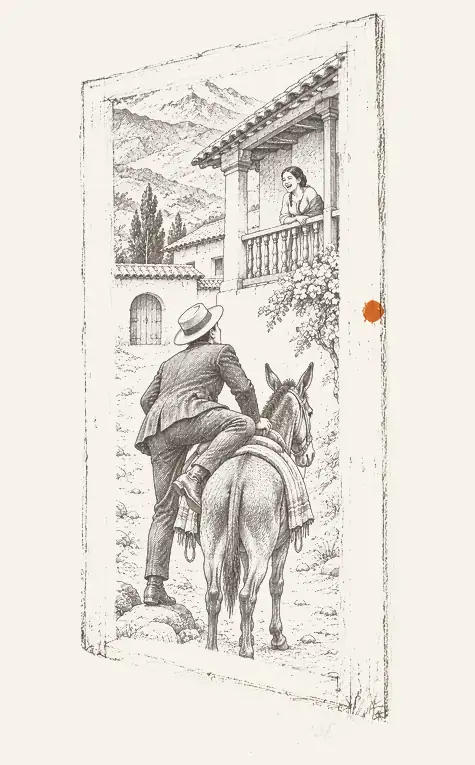
Enrique Rojas y Castilla, a young lawyer in La Paz, dreams of a seat as a deputy. His maternal great-uncle, Pedro Rojas, a landowner in the provinces, urges him to stand; his godfather, the lawyer Manuel María Menéndez, who failed in politics, warns him against it. As the minister refuses to sponsor any candidate, it is the Conservative Party, in opposition, that selects him. After a farewell banquet at which his Liberal friends mock him, he travels by mule to La Huerta, his uncle's hacienda, where he meets again his cousin Inés, lively and teasing, and prepares his campaign against the Garabito clan.
Context
The book appeared in Paris in 1909, at the Sociedad de Ediciones Literarias y Artísticas, librairie Paul Ollendorff, preceded by a prologue by Alcides Arguedas, dated from the same city in April: he sees in it a social document and a satire disguised as sympathy, whose hero embodies a youth for whom a seat in Congress is the highest ambition. Several notices nevertheless place it a year earlier. The narrative, told in the first person, mocks provincial caciquism and rigged elections, with an irony tempered by cheerful scenes. Hachette published a French translation in 1925, and the Bibliothèque du Bicentenaire de Bolivie reissued it in 2018 in a volume of collected works.
Who it is for
In Spanish, with a French translation from 1925; the hero tells the story himself, in an ironic and cheerful tone, an adventure that reads like a comedy of electoral manners.
Prizes and reception
Regarded as one of the best Bolivian novels and, with Casa solariega, as the peak of its author's work, it made him known outside the country.
Sources for this page 6
The pages consulted to check this page.