Poetry
Libertinagem
Not translated into English
Manuel Bandeira · 1930
Synopsis
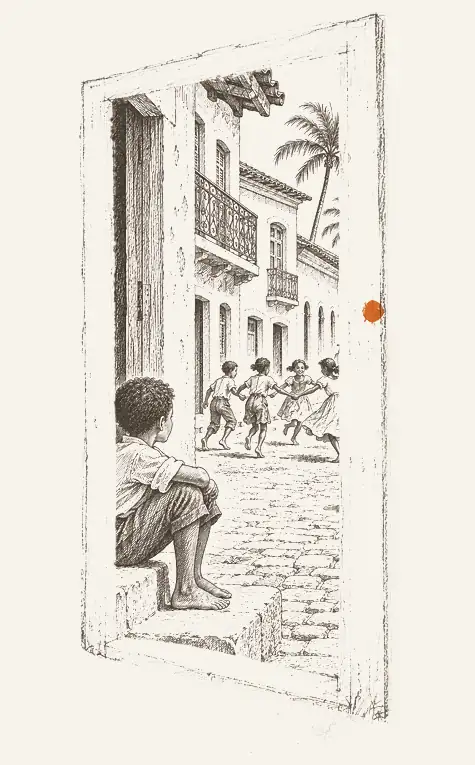
The poet's fourth collection brings together poems written from 1924 to 1930, in free verse with irregular stanzas, with a few prose poems. Childhood in Recife holds a central place in it, notably in “Evocação do Recife”, which brings back to life the city of the last years of the nineteenth century. One also reads there “Vou-me embora pra Pasárgada”, an ironic flight to a dreamed-of land, “Pneumotórax”, which speaks of tuberculosis with simplicity, and “Poética”, a declaration of faith in a free poetry.
Context
The collection appeared in 1930, from Pongetti in Rio according to the journal Signótica, which sees it as a turning point: childhood memories, rare in the earlier books, become a central device in it. According to the Revista do GEL, its author considered it the book closest to the technique and aesthetics of modernism, written in the years of the movement's greatest strength; the title denotes an irreverence towards dogma rather than debauchery. Ribeiro Couto saw in it a total freedom of themes, and Alfredo Bosi a desire for vital and aesthetic freedom.
Who it is for
A short collection, in colloquial language and directly accessible; it has not been translated in full, and French readers go through an anthology published by Seghers in 1960.
Prizes and reception
Presented as one of the principal works of early Brazilian modernism, and as a book of full maturity.
Sources for this page 6
The pages consulted to check this page.