Short stories
Urupês
Not translated into English
Monteiro Lobato · 1918
Synopsis
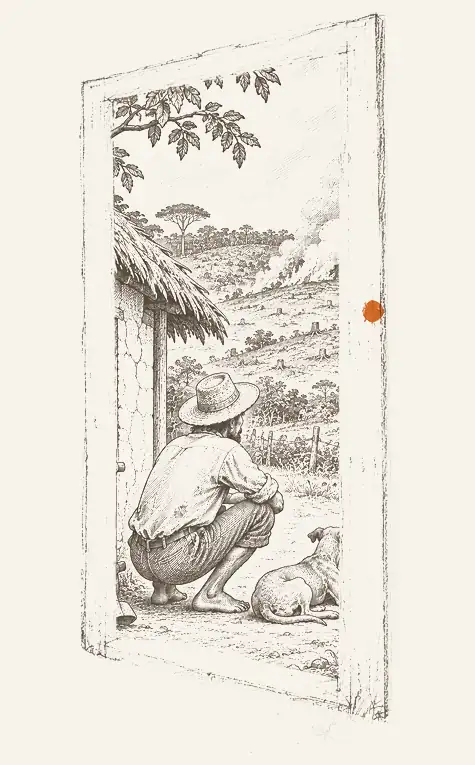
A collection of short stories on rural life in the interior of Brazil, seen through a realist and critical eye. It reprises two texts first published in the São Paulo press: one denounces the burnings that ravage the land, the other, which gives the volume its title, portrays Jeca Tatu, a caboclo of the Paraíba valley, apathetic and fatalistic, presented as a parasite of the land, like the fungus that grows on wood.
Context
The author's first book, the volume appeared in 1918 and became a bookshop success that convinced him the book trade suited him, according to a study published on Redalyc. Rui Barbosa quoted Jeca Tatu in a campaign speech, reports eBiografia. The author later revised his judgement: in a story of 1924, a doctor discovers that the caboclo suffers from hookworm, and the treatment transforms him; the text was taken up by the Fontoura laboratories for the advertising of their tonic.
Who it is for
Short stories and two press articles on country life in São Paulo, in a clear, direct language.
Prizes and reception
Translated into French in 1967; Britannica regards it as a precursor of Brazilian modernism and makes Jeca Tatu the symbol of the country dweller.
Sources for this page 6
The pages consulted to check this page.