Cinema
Zan Boko
Gaston Kaboré · 1988
Synopsis
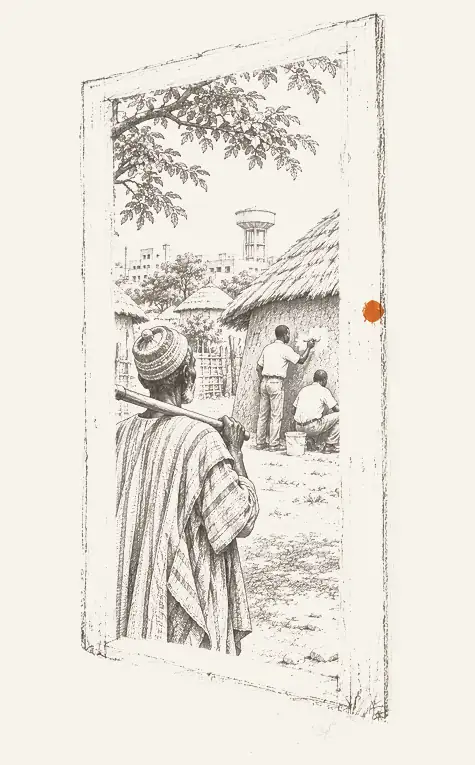
In Mossi country, the village of Tinga lives at its own pace despite the big city that surrounds it, until the day surveyors come to number the houses: the city is expanding and is going to swallow the village. Tinga keeps going to the fields without seeing that he disturbs his new neighbours with his open-air cooking and his livestock; a rich neighbour would like his compound to dig a swimming pool there, but the peasant refuses to give up land that belongs to his ancestors. Yabré, a television journalist already suspended once, wants to bring his case on air.
Context
Shot in 1988 and released in cinemas in 1990, the film is spoken in Mooré. The title refers to the place where a newborn's placenta is buried, the first bond between the child and the land that bears it, and that of its ancestors. Its author said he wished to show the refusal to deny oneself. The second feature-length fiction film by its director, it sets side by side two men from opposite worlds, a peasant who loses his land to a businessman and a journalist whose report on this dispossession is censored; the New York festival saw in it the first film to examine the role of the mass media in contemporary Africa.
Who it is for
A subtitled film in Moré, with a linear narrative. The land question is its single, central subject.
Prizes and reception
Silver Tanit at the Carthage festival and special jury prize at the Amiens festival, in 1988.