Novel
Houseboy
Une vie de boy
Ferdinand Oyono · 1956
Synopsis
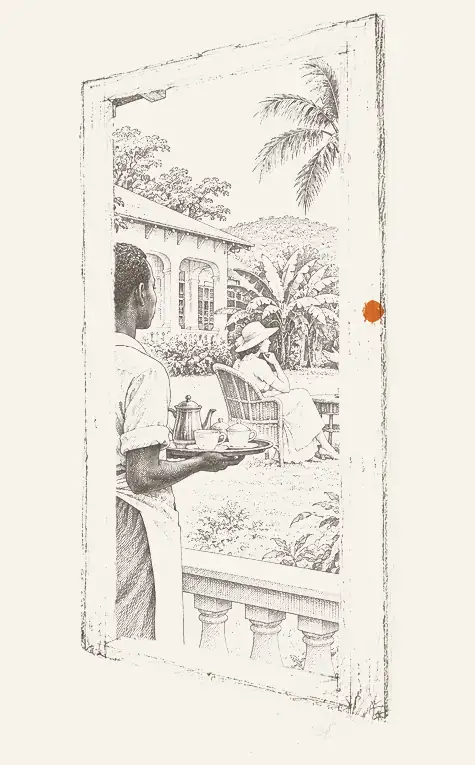
A Frenchman on holiday in Spanish Guinea picks up the notebook of a young Cameroonian, Toundi, and this notebook makes up the book. In it Toundi recounts that he fled a brutal father for Father Gilbert's mission, where he is taught to read and write, is baptised Joseph and is instructed in the Catholic faith. Having become, on the priest's death, the houseboy of the commandant of Dangan, he records the life of the household with candour. The arrival of Madame, who comes from France, changes everything: at first amiable, she grows bored, turns hostile and takes as her lover M. Moreau, the head of the prison, which Toundi knows.
Context
The novel appears in Paris in 1956 from René Julliard, the same year as its author's second novel, and John Reed translates it into English in 1966 under the title Houseboy, in Heinemann's African series. It takes the form of a diary: the boy reports what he sees with candour and a touch of comedy, and the criticism of the missionaries and of paternalistic administrators arises from this gaze. The young man gradually discovers the masks that cover the religion, the justice and the family ideal of the whites. The African Studies Centre in Leiden counts these anticolonialist novels among the classics of twentieth-century African literature.
Who it is for
In French, a short novel in the form of a diary. It helps to know that the commandant represented the French colonial administration in his district.
Prizes and reception
No prize found. Britannica includes it in its survey of African literature written in French.
Sources for this page 3
The pages consulted to check this page.