Narrative
Ngonda
Not translated into English
Marie-Claire Matip · 1958
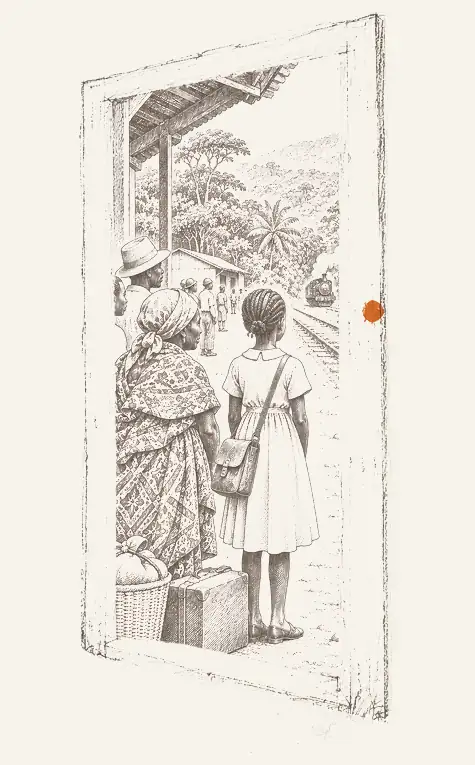
Synopsis
A young girl tells her life from her birth, when her grandmother greets the child with a cry announcing a girl, ngonda, the little girl. Short chapters follow in order of time: childhood and family ties, successes at school and entry to the secondary school in Douala, the taste for writing and the English lessons, then the quarrel with the girls of the village, who stayed in the country and insult her. Finally she reflects on the wisdom of the elders, marriage and the duties expected of African women.
Context
The narrative was begun at the boarding school in Douala, in the mid-fifties, and its author kept it for several years before publishing it. It appeared in 1958 at the Librairie Au Messager, in Douala and Yaoundé, printed in Paris, in forty-eight pages, in the Bibliothèque du jeune Africain series. Without being a manifesto, it takes a feminist view and insists on women's right to learn to read and write. It was studied by Pierrette Herzberger-Fofana in 2000, then by Hogarth and Edwards in 2013.
Who it is for
In French, forty-eight pages. It is worth knowing that the word in the title means little girl in Bassa, and that the woman who wrote it was the same age as her character.
Prizes and reception
No prize found. It is regarded as one of the first books, if not the first, published by a woman from sub-Saharan Africa.