Novel · A way to begin
The Dark Child
L'Enfant noir
Camara Laye · 1953
Synopsis
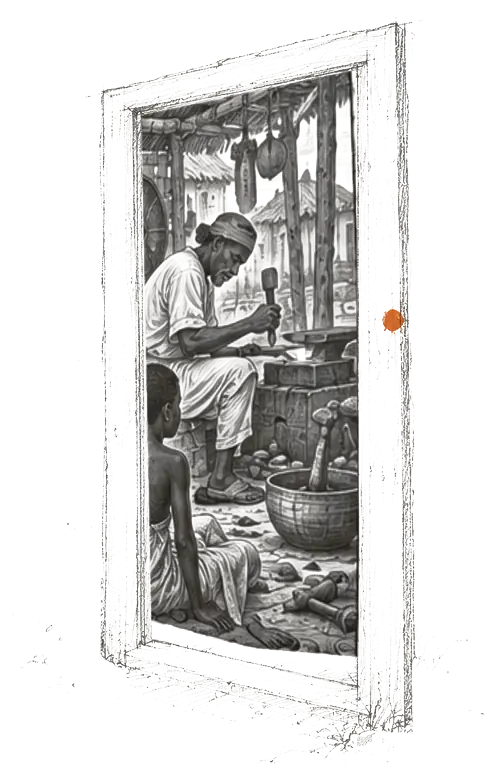
The narrator, Laye, grows up in Kouroussa, in Upper Guinea, with a father who is a blacksmith and goldsmith, whose work with gold he watches, and a mother to whom the book is dedicated. He visits his grandmother in Tindican, a neighbouring village where he discovers farm work, attends the French school, goes through the rites that make him a man, then leaves to study in Conakry. The book follows the childhood and adolescence of a Malinké boy up to the moment when the chance to continue his studies in France opens to him.
Context
Published by Plon in 1953, preceded by a short poem dedicated to the author's mother, the book received the Prix Charles-Veillon in 1954. That same year, Mongo Beti reproached it in Présence africaine for keeping silent about colonial violence, under the title “Afrique noire, littérature rose”; Senghor replied that reproaching him for not having put colonialism on trial amounted to reproaching him for not having written a novel with a thesis. Translated into English as early as 1954, the book was brought to the screen by Laurent Chevallier in 1995.
Who it is for
For readers who like childhood narratives and want to discover Guinea before independence through one of its foundational texts.
Prizes and reception
Alain Mabanckou sees in it one of the founding texts of contemporary African literature, widely studied in Africa and in Europe alike.