Short stories · A way to begin
Cuentos de barro
Not translated into English
Synopsis
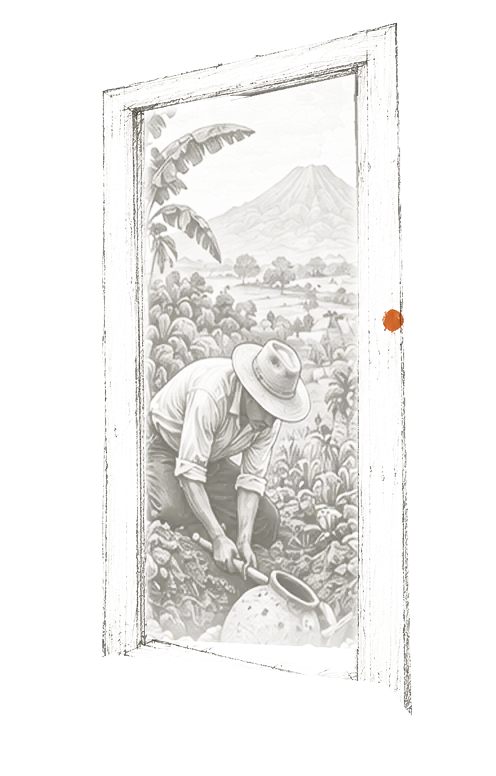
Thirty-three short tales of the Salvadoran countryside, preceded by a prelude in poetic prose, in which the peasants speak as they speak, the spelling following their pronunciation, with the vos and the turns of phrase of the country. José Pashaca, a humble man, begins to dig the earth in the hope of finding a jar full of gold coins; other tales are entitled “La honra”, “Noche Buena” or “La casa embrujada”. Nature takes up as much space in them as the men, and lyrical descriptions envelop plots reduced to the essentials.
Context
The first edition appeared in San Salvador from La Montaña, with engravings by the painter José Mejía Vides, and a vocabulary of about six hundred words accompanies the book for readers who are not from the country. Several stories had first appeared in the press, and the narrow column of Patria may have weighed on their brevity. Long classed as costumbrismo, the collection is read by Miguel Huezo Mixco as an avant-garde work that makes peasant speech a literary material. Its link with the massacre remains debated by critics, between those who read an allusion in it and those who dispute it.
Who it is for
Very short tales, in transcribed peasant Spanish; the glossary placed with the text helps the foreign reader.
Prizes and reception
It is regarded as the most widely published and most widely read Salvadoran book, reissued in Chile, Costa Rica and Spain.
Sources for this page 3
The pages consulted to check this page.