Cuba
- works
- 44
- 24 books · 20 films
- period covered
- 1825–1995
- language of writing
- Spanish
One of the founding books of Cuban literature first appeared in French. Lydia Cabrera had collected in Havana, from old women of Yoruba origin, narratives that she transcribed in Spanish; it was a friend who had them translated and published in Paris in 1936, with a French publisher, before the Spanish version came out in Cuba four years later. A national literature therefore began, for that strand of it, in a foreign language, in another city, and under a translator's signature.
Read moreShow less
That detour tells what Cuba took a long time to admit: its culture is African as much as Spanish. The Yoruba, Congo and Abakuá cults survived there under the name of santería, with their divinities, their drums and their ritual language, and they were treated as a police problem before becoming an object of study. Nicolás Guillén introduced in 1931 the rhythm of the son into learned poetry. Fernando Ortiz coined the word transculturation to describe what the meeting of two cultures produces, each coming out of it modified, rather than using the word mixture.
From there comes a way of telling that founded a school. Alejo Carpentier, returning from Haiti in 1943, formulated the idea that the marvellous does not need to be invented in America since it is already there, and published in 1949 a novel about the Haitian revolution seen by a slave. That proposal opened the way to all of Latin American magic realism. After 1959, state cinema produced remarkable works and a sentence fixed the limits of expression, the one that authorises everything within the revolution and nothing against it. Several writers left, another died in exile after being imprisoned.
What awaits the reader is an avowed verbal virtuosity, a taste for the long sentence and a pleasure in the baroque that does not apologise. The novel that opens this page tells the Haitian revolution as seen by a slave, and its prologue coins the expression marvellous real.
A way to begin
The Kingdom of This World
Alejo Carpentier · 1949
The Haitian revolution seen by a slave, in the novel whose prologue coined the expression marvellous real.
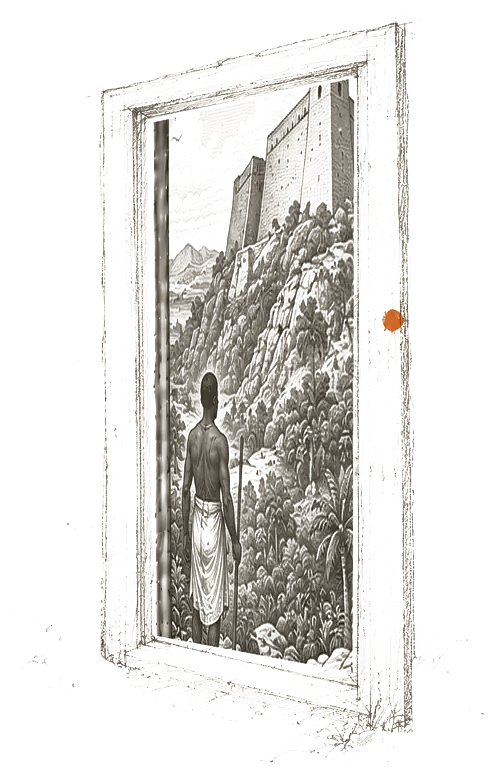
Haiti before, during and after its revolution, seen by Ti Noël, a slave who witnesses events without leading them. Mackandal, a one-armed man hiding in the mountains, launches a poisoning campaign; Boukman gathers the slaves at Bois-Caïman to prepare the uprising; later Henri Christophe, a former cook turned king, has Sans-Souci and the Citadel built by forced labour.
Timeline
- 1880–1895José MartíPoet and revolutionary, killed in battle, he is the father of the nation.
- 1930–1959Before the revolutionCarpentier, Lezama Lima. The Caribbean baroque.
- 1959–1970RevolutionThe film institute is founded the same year. Art becomes a state affair.
- 1971–1990The hardeningMany writers are censored, imprisoned, or leave.
Reading keys
- The Spanish usage of two surnames applies: Alejo Carpentier y Valmont bears his father's name and then his mother's, and one classifies by the first.
- African names have disappeared from the civil registry but survive as ritual names in santería, where the initiate receives a new name.
- The Chinese who arrived as contract workers in the nineteenth century left surnames and a quarter in Havana.
- The extended family and the neighbourhood, on an island short of housing, produce a dense cohabitation that the narratives describe.
- The revolution of 1959 and its limits are the subject whose treatment situates any author politically, and censorship functions through what is not published.
- The period known as the grey five years, in the nineteen seventies, set aside authors for their homosexuality or their religion, and the 1993 film about the friendship between a homosexual and a militant marked an opening.
- Exile and the Miami diaspora are subjects on which every account is situated.
- Racism, officially resolved by the revolution, is a subject whose persistence is difficult to write.
- Catholicism cohabits with santería, or regla de ocha, a cult of Yoruba origin in which each orisha is associated with a Catholic saint. Many Cubans practise both without seeing a contradiction in it.
- The regla de palo, of Congo origin, and the Abakuá society, a male brotherhood come from Calabar with its secret language, complete the religious landscape.
- The babalawo, a diviner, consults through the shells or the table of Ifá, and his opinion commits important decisions.
- The orishas are the same as in Nigeria, in Benin and in Brazil: Changó the storm, Yemayá the sea, Elegguá the crossroads, Ochún the fresh waters.
- Each orisha has its colours, its necklaces, its days and its food prohibitions, and the initiate, the iyawó, wears white for a year.
- Catholic funerals are doubled by rites of palo or of ocha according to the deceased's affiliation.
- 17 December, the feast of Saint Lazarus, associated with Babalú Ayé, gives rise to a mass pilgrimage.
- Rumba, son and the batá drum are not entertainments: the batá calls the orishas and is not played just anywhere.
- The tales collected by Lydia Cabrera, with the orishas and the talking animals, are the Afro-Cuban stock of reference.
- The patakíes, mythological narratives associated with the figures of Ifá divination, serve as answers in consultations.
- The life narrative of a former slave published in 1966, collected from a man of a hundred and four, is a unique document on the end of slavery.
- Pané's Relación, written in 1498, preserves the Taíno cosmogony common to the Greater Antilles.
- Santería is not an approximate syncretism: the orishas and the Catholic saints are associated there according to a precise and coherent system.
- Magic realism is not a Colombian invention: its theoretical formulation is Cuban and dates from 1949.
- Cuba is not culturally homogeneous: the Yoruba, Congo, Calabar, Spanish and Chinese heritages are distinct there and named.
- The revolution did not produce only an official literature: Cuban cinema of the nineteen sixties and seventies is one of the most inventive on the continent.
Tales and mythologies 1
- NovelJardínDulce María Loynaz · 1951not translated into EnglishA Havana house of the twenties and thirties, in a lyrical novel written from 1928 to 1935.Literature
A selection to begin with 10 / 44
- PoetrySóngoro cosongoNicolás Guillén · 1931not translated into EnglishHavana in 1931, where the sound of the Black neighbourhoods enters learned poetry.Literature
- TaleAfro-Cuban TalesCuentos negros de CubaLydia Cabrera · 1936Paris in the mid-thirties, where a young Havanan woman sets down in writing the Afro-Cuban tales of her childhood.Literature
- NovelBiography of a Runaway SlaveBiografía de un cimarrónMiguel Barnet · 1966Cuba from slavery to independence, told in 1963 by a witness who lived through every stage of it.Literature
- NovelThree Trapped TigersTres tristes tigresGuillermo Cabrera Infante · 1967The cabarets and nights of Havana, at the end of the fifties.Literature
- NovelSinging from the WellCelestino antes del albaReinaldo Arenas · 1967The poverty of the peasantry of Oriente under Batista, seen through a child's eyes.Literature
- Feature filmThe Other FranciscoEl otro FranciscoSergio Giral · 1975A nineteenth-century abolitionist novel brought to the screen, then confronted with what slavery was on the plantations.Cinema
- Feature filmOne Way or AnotherDe cierta maneraSara Gómez · 1977A rehoused neighbourhood of Havana after the revolution, where new ideas clash with old habits.Cinema
- Feature filmThe TeacherEl brigadistaOctavio Cortázar · 1977The literacy campaign of 1961, seen from an isolated village where the counter-revolution remained in arms.Cinema
- Feature filmPortrait of TeresaRetrato de TeresaPastor Vega · 1979A woman worker caught between the factory, her three children and a husband for whom the home remains women's business.Cinema
- Feature filmStrawberry and ChocolateFresa y chocolateTomás Gutiérrez Alea and Juan Carlos Tabío · 1993Havana in the late seventies, where associating with the wrong person could be reported and punished.Cinema