Nicaragua
- works
- 20
- 19 books · 1 film
- period covered
- 1883–1988
- language of writing
- Spanish
In 1888, a young man published in Chile a book that would change Spanish poetry. Rubén Darío, born in a village in Nicaragua, mixed in it sonnets, tales and a music of verse borrowed from the French, and launched a movement that would be called modernismo. Within a few years, the poets of Madrid were writing like him and Antonio Machado acknowledged his debt. It is the first time that a literature of America imposed its manner on the former metropolis, and it came from the least populated and the poorest country in the region.
Read moreShow less
Nicaragua has also preserved a play that may be the oldest in the Americas. El Güegüense, danced and performed since the sixteenth or seventeenth century, is a bilingual dialogue in Nawat and Spanish in which a cunning merchant tricks a colonial governor by pretending not to understand what is said to him. The ruse of the subordinate who feigns deafness is raised there to an art, and the word güegüense has passed into the language to designate one who plays the fool.
Those two inheritances, learned virtuosity and the ruse of the dominated, are found again in the literature of the twentieth century, massively poetic and often political. Ernesto Cardenal, a priest and future minister, published in 1957 a long documentary poem assembled from press cuttings and testimonies about the assassination of Sandino. Gioconda Belli, a former combatant, wrote in 1988 the novel of a woman who joins the guerrilla. The revolution of 1979 made poetry a mass practice, with workshops in barracks and cooperatives, an experience unique in Latin America, admired and then debated for its ideological supervision.
What awaits the reader is a highly worked poetry that never separates itself from the event, and an irony of the dominated that goes back four centuries. The book that opens this page gathers tales and verse written in Chile by the young Rubén Darío, and it is regarded as the opening of Spanish American modernism.
A way to begin
Azul…
Rubén Darío · 1888
The book regarded as the opening of Spanish American modernism, free of rights: tales and verse written in Chile by the young Rubén Darío.
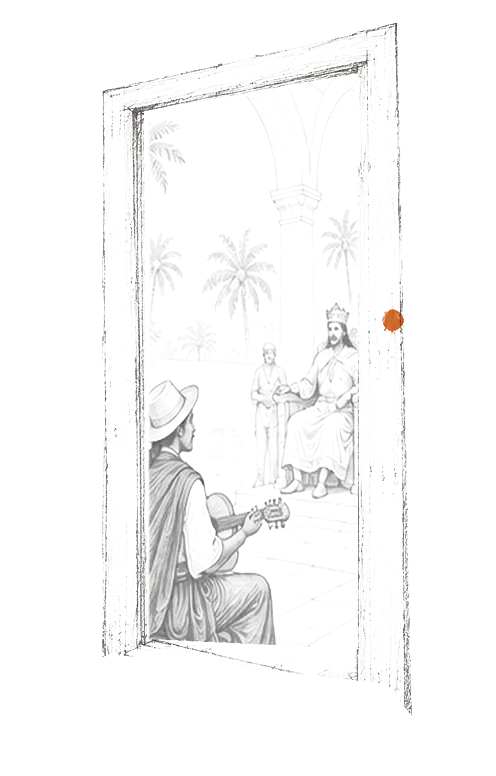
Nine prose tales, sketches of Chile, then a sequence of poems. A starving poet is admitted to the palace of a king who collects knick-knacks and understands nothing of his verse; a sculptor, a painter, a musician and a poet lament their lot in a garret; a ragged poet sings a bitter hymn to gold outside the houses of the rich. The verse follows the seasons of the year.
Timeline
- 1685El GüegüenseThe danced comedy in Nahuatl and Spanish, performed since colonial times.
- 1888AzulFrom Managua, Rubén Darío launches the modern turn of Spanish letters.
- 1928–1948Avant-gardeCoronel Urtecho, Alfonso Cortés, Pallais, Joaquín Pasos.
- 1957–1970CardenalHora 0 and exteriorismo; Pablo Antonio Cuadra takes up the Güegüense again.
- 1979–1988Sandinista revolutionSergio Ramírez in government, Gioconda Belli, and a state cinema.
Reading keys
- The Spanish usage of two surnames applies, and Rubén Darío is a pen name, his civil name being Félix Rubén García Sarmiento.
- The Miskito, Sumu and English-speaking Creole names of the Caribbean coast signal a region that was a distinct British protectorate until 1894.
- Compadrazgo binds families beyond blood and structures social life.
- The extended family and emigration to Costa Rica and the United States are the norm.
- The revolution of 1979, the contra war and the evolution of the regime since 2007 are subjects on which every account is situated, and several writers have recently been stripped of their nationality.
- The American occupation from 1912 to 1933 and the assassination of Sandino in 1934 found the national narrative.
- The Caribbean coast, English-speaking and autonomous since 1987, is little represented in the country's Hispanic literature.
- The rupture between the writers of the revolution and the present authorities is a raw subject.
- Catholicism is in the majority, with a liberation theology that played a major political role and a recent evangelical advance.
- Popular religion mixes Catholic saints and figures of Nawat origin, notably in the patron saints' festivals of Managua and Masaya.
- La Cegua, a woman with a horse's face, and el Cadejo belong to the shared stock of the isthmus.
- The Caribbean coast has its own beliefs, with obeah and the spirits of the water, distinct from those of the interior.
- The wake and the nine days of prayers organise the mourning.
- Black is worn in mourning, often for several months.
- La Purísima, the feast of the Immaculate Conception in December, with its domestic altars and its ritual shouts in the street, is the most intense national celebration.
- The patron saints' festivals of Masaya, with masked dances and characters inherited from the Güegüense, are held over several weeks.
- El Güegüense, with its merchant who feigns deafness, is the founding text and the word has passed into everyday language.
- The narratives collected by the chronicler Oviedo in the sixteenth century preserve the cosmogony of the Nawat-speaking peoples of the region.
- La Cegua and el Cadejo are a bestiary common to the whole of Central America.
- Sandino, killed in 1934, and Darío, who died in 1916, are the two national figures, one political and the other literary.
- Hispanic modernismo was born in America and not in Spain, and Darío exported it to Madrid, not the reverse.
- El Güegüense is not a naive farce but a constructed satire of colonial power, performed under its nose for centuries.
- Nicaragua is not an exclusively Hispanic country: its Caribbean coast is English-speaking, Creole and Miskito, with a status of autonomy.
- The revolution of 1979 and the present authorities are not to be confused, and many writers of the former are today in exile.
Tales and mythologies 1
- TheatreThe GüegüenceEl GüegüenseAnonymous · 1883A masked dance farce of the colonial era, in which an old man's cunning stands up to the Spanish governor of a province and his officers.Literature
Available in English 7
The books from this country that can be read in English, in the original or in translation.
- PoetryTropical Town and Other PoemsSalomón de la Selva · 1918Poems written in English in New York by a young Nicaraguan during the First World War, between nostalgia for his native country and the view he takes of North America.Literature
- PoetryZero HourHora 0Ernesto Cardenal · 1957A poem about the dictatorships of the isthmus and the fruit companies, written by a man who had taken part in a conspiracy against Somoza.Literature
- PoetrySongs of Cifar and the Sweet SeaCantos de CifarPablo Antonio Cuadra · 1971A humble epic in which a sailor from Nicaragua replays the Odyssey on the scale of the islands and the fishermen.Literature
- PoetryThe Earth Is a Satellite of the MoonLa tierra es un satélite de la lunaLeonel Rugama · 1978The poems of a young Nicaraguan poet who died at twenty, between Christian faith, social anger and the language of the Bible.Literature
- NarrativeFire from the MountainLa montaña es algo más que una inmensa estepa verdeOmar Cabezas · 1982The testimony of a León student turned guerrilla, told the way people talk and awarded a prize in Havana.Literature
- NovelDivine PunishmentCastigo divinoSergio Ramírez · 1988A novel built on a case of poisonings that gripped León on the eve of the Somoza dictatorship.Literature
- NovelThe Inhabited WomanLa mujer habitadaGioconda Belli · 1988A novel about a woman's commitment to the guerrilla struggle, in which magical realism links the modern guerrilla to the Indian resistance of the early colonial period.Literature
A selection to begin with 10 / 20
- PoetryTropical Town and Other PoemsSalomón de la Selva · 1918Poems written in English in New York by a young Nicaraguan during the First World War, between nostalgia for his native country and the view he takes of North America.Literature
- PoetryZero HourHora 0Ernesto Cardenal · 1957A poem about the dictatorships of the isthmus and the fruit companies, written by a man who had taken part in a conspiracy against Somoza.Literature
- PoetryPoemas de un jovenJoaquín Pasos · 1962not translated into EnglishThe work of an avant-garde poet from Granada, which remained in journals and manuscripts during his lifetime, gathered according to the plan he had left.Literature
- NovelTrágame tierraLizandro Chávez Alfaro · 1969not translated into EnglishA novel of fathers and sons on the country's Atlantic coast, between the dream of a canal and the guerrilla war against the Somozas.Literature
- PoetrySongs of Cifar and the Sweet SeaCantos de CifarPablo Antonio Cuadra · 1971A humble epic in which a sailor from Nicaragua replays the Odyssey on the scale of the islands and the fishermen.Literature
- PoetryThe Earth Is a Satellite of the MoonLa tierra es un satélite de la lunaLeonel Rugama · 1978The poems of a young Nicaraguan poet who died at twenty, between Christian faith, social anger and the language of the Bible.Literature
- NarrativeFire from the MountainLa montaña es algo más que una inmensa estepa verdeOmar Cabezas · 1982The testimony of a León student turned guerrilla, told the way people talk and awarded a prize in Havana.Literature
- NovelThe Inhabited WomanLa mujer habitadaGioconda Belli · 1988A novel about a woman's commitment to the guerrilla struggle, in which magical realism links the modern guerrilla to the Indian resistance of the early colonial period.Literature
- Feature filmThe Ghost of WarEl espectro de la guerraRamiro Lacayo Deshon · 1988A fiction film shot during the Contra war, with Cuban, Mexican and Spanish partners.Cinema
- NovelDivine PunishmentCastigo divinoSergio Ramírez · 1988A novel built on a case of poisonings that gripped León on the eve of the Somoza dictatorship.Literature