Sierra Leone
- works
- 17
- 17 books
- period covered
- 1868–1994
- language of writing
- English
In 1787, four hundred people landed on this coast to found a colony they called the Province of Freedom. They were former slaves and poor Black people from London, and the enterprise failed within a year. It began again in 1792 with more than a thousand Black people come from Nova Scotia, who landed singing hymns, then with Jamaicans, then with the thousands of captives freed by the British navy from the ships it intercepted. The latter came from everywhere and did not speak the same language. In one generation, they manufactured one.
Read moreShow less
That language, Krio, is the direct result of the country's history: an English-based creole, forged by people who had nothing else in common than having been torn away. Freetown became in the nineteenth century a centre of schooling for the whole of West Africa, with a college that trained pastors and doctors long before the other colonies had secondary schools. The Krio supplied elites to half a dozen neighbouring countries, which earned them a lasting prestige and a lasting resentment.
Hence a literature that takes language seriously. Thomas Decker translated Julius Caesar into Krio in 1964, not for a laugh but to prove that this language can carry Shakespeare. Dele Charley wrote in the nineteen eighties a Krio theatre performed to full houses. In 1960, William Conton published one of the first African novels to recount an African student in England, and Adelaide Casely-Hayford published the same year a story about a Freetown coffin merchant who imitates the English. The price was the civil war from 1991 to 2002, which destroyed the institutions and silenced a generation.
What awaits the reader is a precise social irony, often directed against the imitation of the masters, and a pleasure in language. The novel that opens this page follows an African scholarship student in England, between a thwarted love and his country's politics, and it appeared in the year of independence.
A way to begin
The African
William Conton · 1960
An African scholarship student in England, between an impossible love and his country's politics: a first novel published in the year of independence.
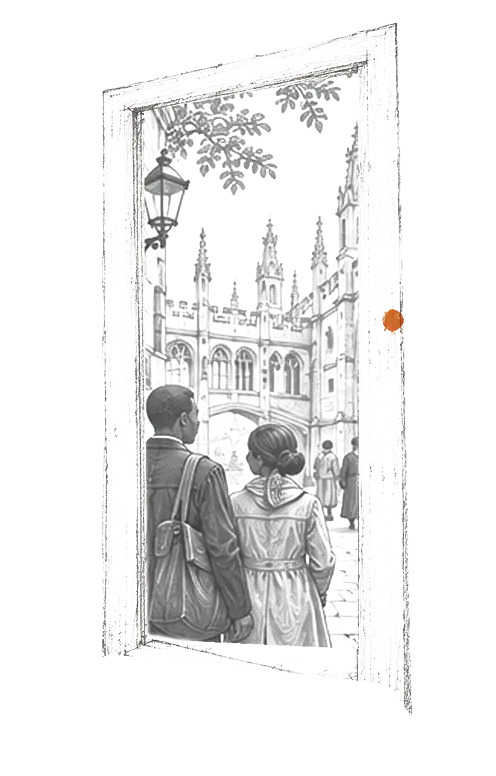
Kisimi Kamara leaves his village in Songhai, an imaginary West African country, for the mission school and then the college in the capital, and wins the chance to continue his studies in England, from where his community expects him to return and serve it. At university he discovers English prejudice and falls for Greta, a young white South African, in a country where others' eyes weigh on their budding friendship.
Timeline
- 1948–1960Voices of FreetownGladys and Adelaide Casely-Hayford, Crispin George.
- 1960–1966IndependenceConton, Wellesley Cole, Abioseh Nicol. Thomas Decker writes in Krio.
- 1968–1975The next generationCheney-Coker, Lemuel Johnson, Yulisa Amadu Maddy.
- 1979–1982Theatre in KrioKargbo, Dele Charley. The stage becomes the liveliest form.
Reading keys
- Krio names are English or biblical, Casely-Hayford, Decker, Cole, Johnson, and indicate no European ancestry: they come from the freedmen and the liberated.
- The Temne, Mende and Limba names, Kargbo, Sesay, Mansaray, designate the populations of the interior, distinct from the Krio of Freetown.
- The distinction between the Krio of the capital and the populations of the interior is the country's main social line and is legible in names.
- Mende societies are in part matrilineal and have had women chiefs, which is old and documented.
- The civil war from 1991 to 2002, the child soldiers and the mutilations are a subject of which the country's literature speaks less than foreign production does.
- The relation between the Krio and the populations of the interior carries an old hierarchy rarely named head-on.
- The initiatory societies, poro for men and bundu for women, impose secrecy. A narrative may stop for that reason.
- Excision, practised within the framework of the bundu, is a difficult internal subject.
- Islam is in the majority, Christianity important in Freetown, and the two coexist with a remarkable absence of conflict.
- The poro and bundu societies form religious, political and judicial institutions, with their sacred woods and their masks.
- The bundu mask, carved and worn by women, is one of the rare African masks danced by women.
- The spirits of the bush and of the water have their prohibitions, and the healers deal with them.
- Muslim mourning is brief, Krio mourning includes a wake and a commemoration on the fortieth day, the awujoh, with a meal shared with the ancestors.
- White marks the coming out of initiation and the ceremonies of purification.
- The bundu mask, black and glossy, appears when girls come out of the initiation grove.
- Muslim and Christian festivals are celebrated by all, including between neighbours of different confessions.
- The thirty-eight Temne tales collected in 1903 in the pidgin of the storytellers, with the cunnie rabbit which is in fact a pygmy antelope, form the documented corpus.
- The Temne traditions published as early as 1861, seven fables and historical narratives, are among the first African collections in print.
- The poro and bundu societies and their vocabulary are a common knowledge that the texts assume is known.
- The memory of the freedmen, the recaptives and Bunce Island, a slave trading post, is a shared reference.
- Krio is not approximate English but a language in its own right, into which Shakespeare has been translated.
- The Krio are not settlers: they are descendants of freed slaves, and their dominant position in Freetown is the product of a particular history.
- The country cannot be summed up by its civil war, and its literature begins thirty years before it.
- The bundu mask is danced by women, which contradicts the received idea that African masks are a men's affair.
Tales and mythologies 1
- TaleCunnie Rabbit, Mr. Spider and the Other BeefFlorence Cronise and Henry Ward · 1903The tales of the children of a mission school, in Temne country, written down in the language in which they told them.Literature
A selection to begin with 10 / 17
- Short storiesMista CouriferAdelaide Casely-Hayford · 1960An Anglomaniac father and his son, in the Creole Freetown of the fifties.Literature
- TheatreJulius CaesarJuliohs SizaThomas Decker · 1964The tragedy of Julius Caesar rendered in the Creole of Freetown, to prove that it could say everything.Literature
- TheatreDear Parent and OgreRaymond Sarif Easmon · 1964A drawing-room comedy in the high society of the capital, in which a marriage plan tests a family's caste spirit.Literature
- EssayOthello's CountrymenEldred Durosimi Jones · 1965A Sierra Leonean critic's book on how Shakespeare and his contemporaries saw Africa.Literature
- Short storiesThe Truly Married Woman and Other StoriesAbioseh Nicol · 1965Seven West African stories of quiet irony, in which what decides a life often comes down to very little.Literature
- NovelNo Past, No Present, No FutureYulisa Amadu Maddy · 1973Three boys from the same West African childhood, each put to the test separately by departure for Europe.Literature
- PoetryHighlife for CalibanLemuel Johnson · 1973Poems that take the figures bequeathed by English literature and set them dancing to West African cabaret music.Literature
- TheatreThe Blood of a StrangerDele Charley · 1977A white man who has come to seek a village's diamonds, and the notables who help him there, under British administration.Literature
- TheatreLet Me Die AloneJohn Kolosa Kargbo · 1979A Mende chiefdom under British protectorate, where a woman takes over the power of a dead man and must hold it against her own people.Literature
- NovelRoad to FreedomYema Lucilda Hunter · 1982The founding of Freetown, told by a little girl who came from Nova Scotia with the Black settlers.Literature